Friday, August 28, 2009

Moving.....Again.


Thrilled to be starting my new life in the city I know and love.

Sad to be leaving beautiful, green, liberal Eugene, Oregon.


That is all.

Thursday, August 27, 2009

In Memorandum...


As I was thinking about what to write today, I was inspired by the recent news that Reactor Field, the parking lot that University of Missouri students tailgate in before football games, is now closed to students.

Tailgating on college gameday is as American as apple pie or baseball (both of which, incidentally, can be found at a good tailgate.)

Some of my best memories from graduate school involve crisp fall mornings, 20 of my favorite classmates, and yes, beer. At Reactor Field.

In fairness, though, responsible 20-something journalism graduate students are not of concern to the university. But it's a shame that a few beer-soaked, aggressive bad seeds (like the guy with 800 beers in his trunk. 800 beers?!?!) have to ruin the fun for the rest of us by getting sloppy and starting fights. Reading the comments following the Columbia Tribune article demonstrates very clearly that there is some controversy here. I'm sure my fellow graduates share my regret about Reactor's closing.

In other Mizzou news, Anheuser-Busch has begun promoting "fan cans"--cans of Bud Light adorned in college colors for the football season.

Hmmm, drink Bud Light and show your school spirit. How is this good for underage drinking?


One more thing about college drinking (only because I have opinions about it):

I feel very torn about the term "party school."

I am a proud graduate of UC Santa Barbara.

And I hear all of the time, "You went to UCSB? Isn't that a party school?"

Apparently its reputation transcends state lines.

But I've always believed that the school is what you make of it. Sure, there was always the opportunity to have some debaucherous good times at anonymous house parties or crowded frat houses (though we didn't have football--our innertube waterpolo game tailgates just didn't measure up somehow.)

But there were also some really intelligent people at that school--people who could handle the healthy mix between school and fun (or what I affectionately call, the "work hard play hard" mentality.)

So I feel proud that UCSB is consistently ranked among the best "party schools" in the country:
#10 on Princeton Review
#5 on Pubclub.com (ahead of Georgia, Ohio State AND Arizona State. Nice!)
And #12 on Playboy

But who's counting?

Wednesday, August 26, 2009


Ah, the fun of getting dressed for work first thing in the morning. Unless you work for UPS or in some kind of law enforcement, it can be a pain.

I don't know if it's our generation, or if dress codes aren't enforced as they used to be, but office wardrobe controversy seems to be a problem these days.

A friend of mine, a newspaper reporter, gave me the idea to write about this after seeing a TV reporter show up on scene to report a story wearing flip flops.

The scene was an archeological dig.

In her words,
"Flip flops are not about a generational difference. It's about safety on the job. You can quote me on that."

The thing is, I don't care if this young woman was reporting from the Beverly Hills Beach Club, pina colada in hand and surrounded by cabana boys. There is no room in the workplace for casual clothing. Especially for a young professional just starting out.

I'm sure most people have stories from their offices of people who have dressed inappropriately.

A Careerbuilder survey showed that 41 percent of U.S. employers said that people who dress better or more professionally tend to be promoted over other people in their organization.

As they always say, "dress for the job you want, not the job you have."

This, of course, depends on the industry in which you work, so you need to use your own common sense. Unless your common sense tells to to wear colorful plastic clogs to the office (assuming your office isn't a vegetable garden.)

For me, I moved from the Colorado mountains to Columbia, Missouri, followed by a brief stint in Eugene, Oregon. Not exactly the high power centers of the fashion universe.

But now I'm looking for work in San Francisco. This means I can kiss my cute short skirts and flat sandals goodbye, at least during the work week.

I'm not saying that nylons, turtlenecks and shoes that look like they serve an orthopedic function will grace my body for the rest of my life.

But I think that perhaps young people drastically underestimate the power that their clothing has on the way people perceive them.

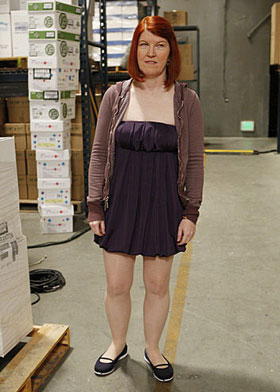
As a side note, did you see the casual Friday episode of The Office? Meredith's outfit was priceless--makes me smile just thinking about it.

Tuesday, August 25, 2009

Career options


In my quest to find the perfect job, I've been looking a lot into the industries in which PR is important. I've recently applied for a job with Chronicle Books, a really creative, forward-thinking small publishing house in San Francisco.

Now that I have a decent (albeit limited) understanding of the publishing industry thanks to the world wide web and Google Books, I've recently taken the plunge and added publicist/marketing/promotions in publishing onto my short but distinguished list of dream jobs.

It's great for people who like to write but don't want to be journalists, enjoy a team environment, and want an ongoing liberal arts education.

Check. Check. And check again.

So in honor of this recent revelation, I thought I'd share some interesting little publishing related nuggets I've learned in my research as of late. I thought they were fun. Hopefully you will too.

1. Dan Brown's new book The Lost Symbol.

Admit it. You like his books. Don't worry, you're not alone. The author of the Da Vinci Code and Angels & Demons could publish his grocery list and his fans would go running to Borders to reserve a copy. But if you're not Brown or his publishers, you wish it would just go away. People are saying that the book could actually be bad for publishing, some even calling it a "book killer."

--People will run into bookstores to buy this book: eye on the prize, never stopping to browse at other selections. To add insult to injury, they won't likely be paying full price.

--Media attention to The Lost Symbol will steal attention away from other books, and also eat into their sales. More insult to injury: the number of media outlets covering books is down.

2. Eat Pray Love author Elizabeth Gilbert gets a rebuttle.

From her husband. The one she left at the beginning of the best selling "single woman adventure around the world" memoir.

It will be called Displacement, and if it does well, it's only because he's riding the coattails of his ex-wife. Publishers call it "dueling memoirs" and it's been done before. Over and over.

3. Cake Wrecks: When Professional Cakes Go Horribly Hilariously Wrong.

Have you seen this? You HAVE TO. Just a great example of a woman who writes for fun and makes a living doing it. The website is awesome. And the book is due out soon.
These two came very highly recommended. I hope you laugh as hard as I did:

Cake phone orders
and Fireman

It excites me at how excited I get looking through publishing related news and controversy. Maybe it's because I don't get out much.

But hopefully it's because there's something great in the works.

Monday, August 24, 2009


Today's post is more career-y and less a chronicle of the things happening in my head. I do love writing general musings about life, but in this time of unemployment, I should also keep my eye on the ball.

Plus, I'm a self-professed computer nerd who likes reading about my industry.

So, without further ado, I give you....

The press release.

PR people depend on it. Most journalists resent it.

Even with the vast array of options available for communication about a company, product, or event, press releases are still relevant and effective assuming they are used correctly.

If a press release is good, it can result in great coverage with traditional media outlets as well as with influential bloggers and social media writers.

But if a press release is bad, it encounters the same fate it always did. Whereas it once fell straight from the fax machine into the recycle bin, it is now labeled as "PR spam" and sent straight from the inbox to the virtual rubbish bin.

So even though I went to journalism school, and decided halfway through that my future will not include sitting in on city council meetings or relentlessly calling a source who has made it very clear that he/she doesn't want to speak with me, I feel that I'm armed with some journalistic skills that will make me a fantastic PR person someday.

Here are just a few things I learned, proving once again that my time spent studying journalism was not a total wash:

1. A good press release, like a good news story, should grab the reader at the first paragraph.

First and foremost, this means telling a great story.
Great stories get attention. Make the story good, and makes sure people know it's good before they finish the first paragraph.

Second, it means tailoring the message to the audience. How is your message going to make the lives of the audience (and their readers) better? Look at what the writer writes about. Look at his/her audience. Go from there.

2. Good press releases, like good news stories, should be timely and relevant.

Make sure that you concoct a reason for sending out your information here and now. As my journalism professors used to say, "Why should I care?"

Tell them why they should.

3. Good press releases, like good news stories, should be concise and simple.

The ultimate purpose of journalism is to take a seemingly complicated story and make it readable--to interpret the facts and lay them out for people to understand.

I don't care if you work for NASAs Heliophysics Research Program. Keep the release uncomplicated. Leave out the lame quotes and executive psychobabble.

4. Good press releases, like good news stories, should be well written.

Nobody likes bad grammar. Nobody likes it when you use "your" when you mean "you're" or there" when you mean "they're." It's like nails on a chalkboard, and journalists will abandon your grammatically incorrect press release in steadfast defense of the English language.

Armed with this knowledge, I vow right now to stay off journalists' PR spammer lists even before I begin my career.

Saturday, August 22, 2009


Thanks to the unspeakable power that is Facebook, I'm meeting up with some really old friends this evening.

Like, people I haven't spoken to in a decade.

People I went to high school with.

People with whom I would have most likely never spent more time past the hazy fog that was our all-night graduation trip to Disneyland.

Enter Facebook.

We all live in the Bay Area. We are all free on Saturday night. And we all enjoy wine.

The funniest thing about it is that through aforementioned Facebook awesomeness, I know more about their lives than I should considering I haven't talked to either of them for such a long time.

Not in a creepy stalker-type of way.

But I know how long their hair is. I know where they work, and if they're dating anyone. I know that one of them had an issue when Wells Fargo lost her paycheck, and the other is thinking of a new career in the medical field.

I don't know if we'll have the world to talk about, or if conversation will run dry quicker than our first drinks.

I don't know if we'll talk about our present and future, or if our conversation will remain in high school.

But I do know that I'm thankful for Facebook. A girl can never have too many friends.

No better opportunity than to rekindle some old friendships.

Friday, August 21, 2009

Tworkers!


Twitter in the workplace.

Have you thought about it? Would you, oh powerful and forward-thinking big boss, allow your employees to use it in the office?

(Disclaimer: Call me bold and presumptuous for making management decisions while I as yet don't even have a job. I say, putting the cart before the horse is fine when you have a lot of time on your hands.)

So, here are the arguments:

*Cynics would say allowing employees to Twitter at work (twork--God bless the 21st century with its spike in newfangled words) wastes time and opens a company to potentially harmful comments by employees.

*I am of the opposite camp, in agreement with the author of this story. Twitter is not going anywhere fast, so acknowledging its presence and creating a policy is important, not to mention an asset to your company. It's Twintelligent!

Here's why:

Tworkers are extroverts. They like showing off, which can be a huge benefit to your company.

Tworkers like that community feeling that Twitter helps to create. This could mean that they are open to sharing and compassionate.

Tworkers are open to trying new things. In the thick of the new media frontier, this is important if you want your company to innovate.

Tworkers make friends with people they don't know. As long as this employee is on your side, this is a great asset.

Tworkers are concise.
Getting straight to the point is important when you only have 140 characters to do it in.

And I'll add one: It can it be a great (and free) PR tool to distribute your message, and a way to see what people are saying about you.

Finally, you can learn a ton about your industry and competitors with Twitter.

I used to be a cocktail waitress at an upscale hotel. Drinking on the job was forbidden. I vowed that if I ever owned a bar, I would allow employees one pre-work cocktail. In my eyes, as long as you know its happening, its practical to create a policy for it.

Not to mention that some upscale hotel guests are easier to manage when you've had a stiff drink or two.